01
Running out
The late decision can't be rescued. Sales stop while the next batch catches up.

For small manufacturers who make and sell their own products
Know when to make more, and whether you can.
Gravidia's planning engine works backward from the day each product will run out, through production time, to the day you need to order materials.
In private development. Opening to a small first group.
LT-NAT · 50 on hand · selling 2.1 a day
Order materials
By Oct 24
400 brass zippers · 7-day lead time
Start production
By Oct 31
Batch of 120 · 14 days to make
Runs out
Nov 14
At today's sales speed
The reviews, the craftsmanship, the restock that sold out in a day. Behind it: a costing spreadsheet one price change out of date, supplier lead times kept in your head, and a production schedule that lives on a whiteboard.
You're not bad at business. You've been holding the operation up by hand.
The problem
The distance between when you find out you need more, and when you needed to start.
Oct 3
You needed to start production
Oct 15
You find out
Oct 22
Out of stock
Spreadsheets tell you what already happened. By the time the numbers look bad, the moment to start has passed. The gap costs you in one of three ways:
01
The late decision can't be rescued. Sales stop while the next batch catches up.
02
It can be rescued, at a price: air freight instead of sea, rush batches, overtime, and materials at whatever the supplier charges this week.
03
After a scare, you over-correct. Cash sits on the shelf as materials you won't use for months.
A real order
Sea freight is the cheapest way to bring goods from an overseas supplier. It's also the slowest, so you can only choose it if you see the need coming. Here's one recent order of 5,000 pieces, quoted both ways.
10 days in transit
$1.97per piece
30 days in transit
$1.56per piece
$2,050 saved on one order.
$0.41 less per piece: 21% off the cost of every unit.
The price of the cheaper option: deciding 20 days earlier.
How it works
Gravidia connects to Shopify for your products, locations and stock levels, so your counts stay current without retyping.
Materials, work activities and sub-assemblies, entered once. Costs and requirements flow from there.
For every product, it works out the day it runs out, the day production must start, and the day each material must be ordered.
Each morning, by email: what to make, what to order, and what can wait.
The whole chain, not a reorder point
Order zippers
Oct 24
Start production
Oct 31
Tote runs out
Nov 14
Recipes can nest: a sub-assembly's own materials are planned back from the date the sub-assembly is needed.
From: Gravidia · 6:00 AM
Order now
400 brass zippers for Leather Tote · Natural
Due Oct 24 · 3 days left
Coming up
Start a batch of 120 Leather Tote · Natural
Due Oct 31 · materials on hand except zippers
Everything else is on track.
You make it. That takes materials, lead time and capacity to run the batch. An inventory tool can tell you a number is getting low. It can't tell you when to order the zipper for the bag you'll run out of in six weeks.
Gravidia's planning engine works out the whole chain: materials, then production, then the day you run out.
Who it's for
Who's building it
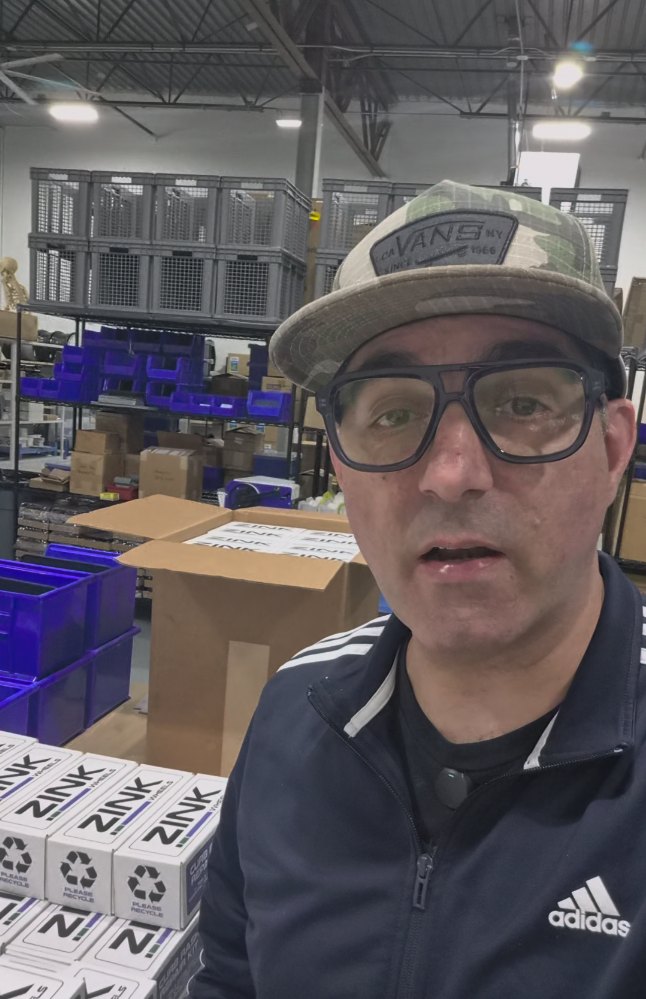
Gravidia is built by Tony Zink. It isn't a demo: it's being built and tested at Zink Wheels, a real manufacturing business with real materials, real batches and real multi-channel sales. Every feature has to work against an actual production schedule before it ships.
It's early, and we'd rather say so. There's no customer list to show you yet. What there is: a working product, an operator who uses it, and a plan to onboard a small first group properly rather than a large one badly.
Pricing
Every plan includes the whole planning engine: production recipes with sub-assemblies, the Shopify connection, the countdown and the Daily Brief. Plans differ by size, depending on SKU count and users.
We're onboarding a small number of businesses at a time. The questions here aren't filler: they're how we work out who to talk to first.